
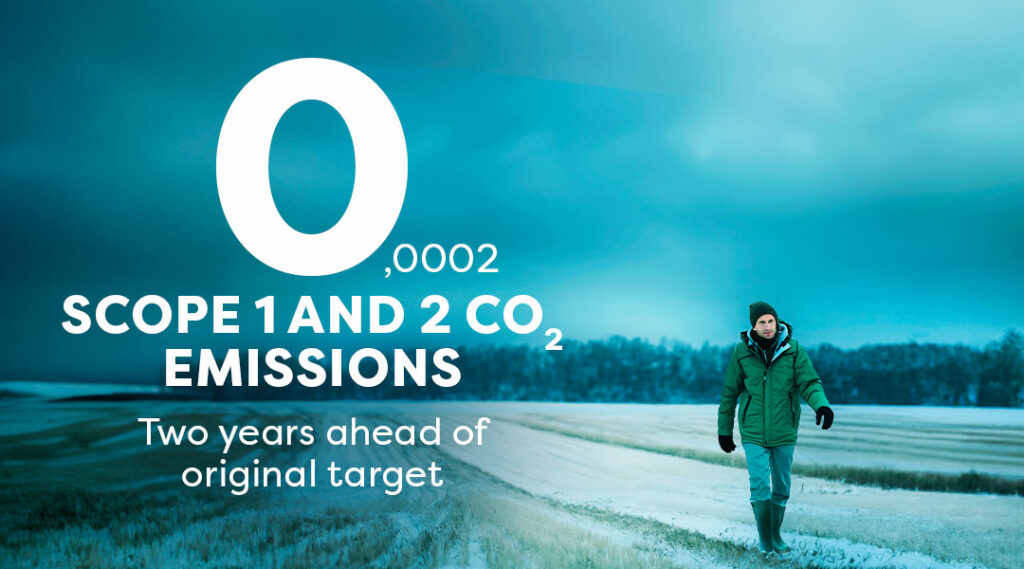
Our 2025 sustainability results are now in, and we are proud to share that we have already reached one of our key targets two years ahead of schedule. We have reduced our Scope 1 and 2 emissions to almost zero, achieving a major milestone in our climate work.
Which naturally raises the next question, what comes after zero?
While this achievement marks an important step forward, our sustainability journey is far from complete. Our sustainability strategy still includes ambitious goals across climate action, circular economy and social responsibility, and there is plenty of work ahead in all three areas.
Namely being a frontrunner in sustainability is not always easy. Moving first means investing earlier, facing uncertainty and solving problems that others have not yet encountered. But for us, it is the only way growing forward.
By scrolling down, you can explore in more detail both our achievements and the challenges we encountered over the past year.
Zero emissions ahead of schedule
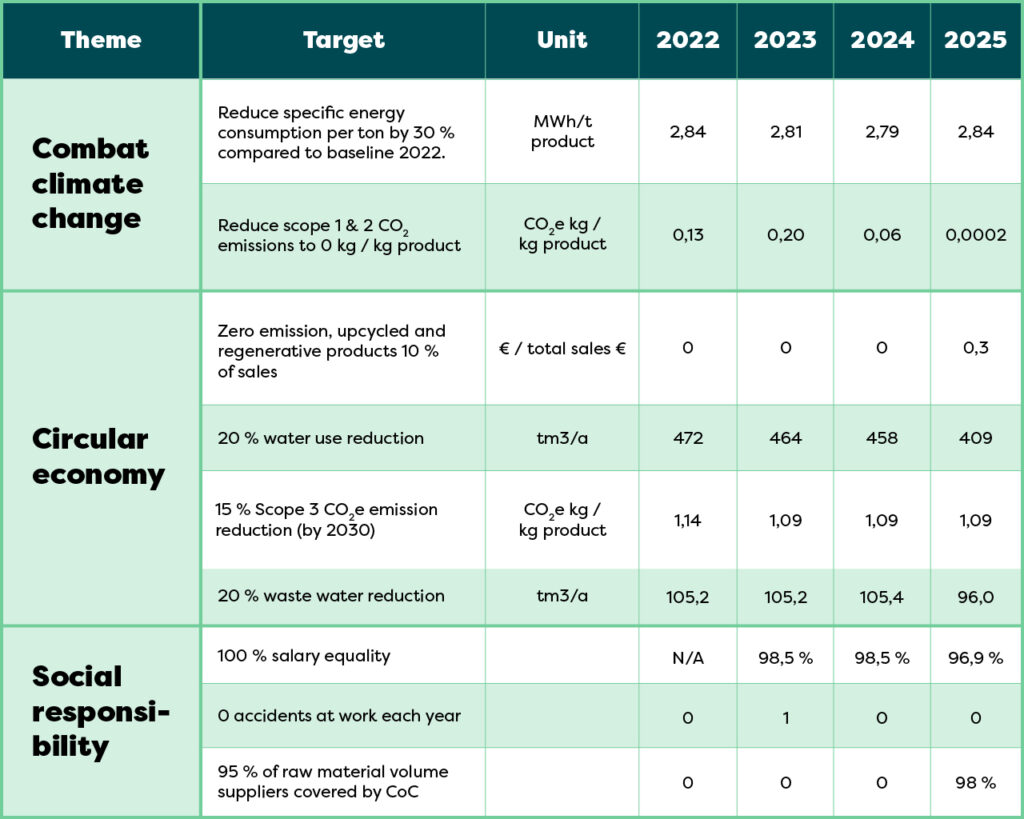
In our Growing Forward sustainability strategy, we set two key targets to combat climate change: reducing energy consumption by 30 percent and cutting Scope 1 and 2 emissions to zero by 2027.
On emissions, we have already achieved our Scope 1 and 2 target two years ahead of schedule. Over the past three years, we have reduced our Scope 1 and 2 CO₂ emissions by nearly 99 percent compared to our 2022 baseline, mainly by transitioning to emission-free electricity and changing how energy is sourced and used in our production.
Energy consumption, however, has not yet declined as planned. The main reason is that several investments aimed at improving energy efficiency had to be postponed.
– We had planned a number of investments to reduce energy consumption, but some of them had to be delayed, says Managing Director Pontus Forth.
– Those projects are now moving forward, and we expect them to be implemented during this year and next.
Once these investments are completed, we expect to see significant improvements in energy efficiency in the coming years.
Strong results in water efficiency, tougher road for new products
Circular economy is another key focus area in our Growing Forward sustainability strategy. Over the past year, we have made measurable progress in reducing our environmental impact through more efficient resource use.
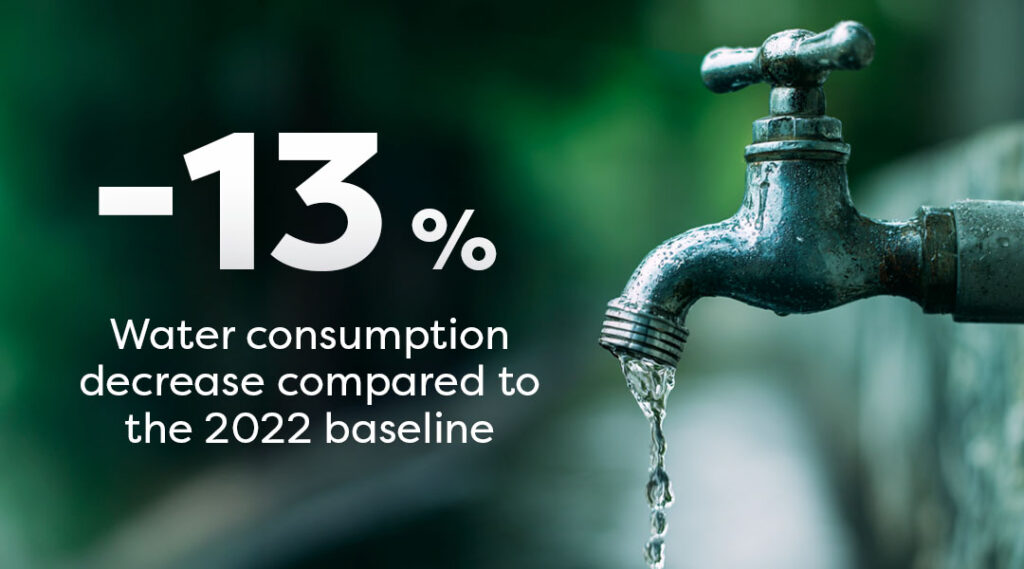
Our water consumption decreased by 13 percent compared to the 2022 baseline, largely thanks to targeted maintenance work, including valve servicing and repairs across the production process. At the same time, our wastewater volumes decreased by 9 percent, reflecting the same improvement: when less water is used, less wastewater is generated. In order to achieve the 2027 target of -20%, we are now also investing in specific equipment to clean and repurpose waste water to reduce the waste water going to “waste”.
EU food waste targets raise the stakes for circular innovation
At the European level, the circular economy is also gaining momentum. In 2025, the EU revised its Waste Framework Directive, introducing the first binding food waste reduction targets across the food supply chain. By 2030, Member States must reduce food waste by 10 percent in processing and manufacturing and by 30 percent per capita in retail, restaurants and households.
Member States now have around 20 months to transpose the directive into national legislation, meaning the new rules will begin shaping food industry practices across Europe by 2027.
This regulatory push is expected to accelerate the transition toward circular production models and increase pressure on companies to find new ways to reduce waste and valorise side streams.
Circular innovation, progress and patience
However, building a circular product portfolio has proven to be more demanding than expected. Our goal is that 10 percent of Senson’s revenue will come from circular economy products by 2027, but currently these products account for only 0.3 percent of sales.
At the same time, important progress has already been made. Through our Senson Revived concept, launched in FIE in December 2025, we have introduced new circular products such as Rye Revived and Barley Revived, which turn food industry side streams into functional extracts for food and beverage applications.
According to Managing Director Pontus Forth, the experience has highlighted how complex circular innovation can be in practice.
– Developing circular products takes time. In one case, development took nearly a year before we even reached the starting point. Meeting all the quality requirements proved more challenging than we initially expected. It definitely wasn’t a plug-and-play process, Forth says.
The lesson, he adds, is that turning side streams into commercially viable ingredients requires persistence and long-term commitment. But it is exactly this kind of work that can ultimately transform the food industry toward more circular production.
Sustainability is a long-term commitment
Our sustainability programme also includes social responsibility targets. One area of focus has been workplace safety. During the past year, we introduced a new app-based system for reporting safety observations, making it easier for employees to report potential risks and unsafe situations in their daily work. This has led to a 17 % increase in the notices during last year.
At the same time, our long-term safety work is reflected in another milestone: our operations have now reached more than 850 days without a workplace accident requiring sick leave.
We have also made strong progress in responsible sourcing. Our target was that 95 percent of raw material volume suppliers meet our Code of Conduct requirements, and we have already exceeded this, reaching 98 percent.
Salary equality saw a slight decrease during the year, mainly due to changes in personnel structure. A new managerial position was filled, which impacted the overall balance, as the role carries a higher salary level compared to existing positions. Despite this shift, we remain committed to improving salary equality and continue working towards a more balanced and fair structure over time.
What really comes after zero?
Through our Growing Forward strategy, we will continue working to reduce our climate impact, develop circular solutions and strengthen responsible practices across our operations.
And as we look ahead, the question remains the same as in the beginning: what comes after zero?
For us, the answer lies in going further. Reducing our broader (scope 3) value chain emissions through working with our suppliers, scaling circular products and continuing to push the boundaries of what responsible food ingredient production can look like.